Showing posts with label Panama. Show all posts

Friday, January 20, 2012

Ulu Sails

This past winter we were lucky enough to enjoy our 2nd season cruising the San Blas Islands of Panama.  It's home to the Kuna Indians who live mostly on small islands just off Panama's eastern Caribbean coast.


                                The outer reef north of Chicheme, Kuna Yala (San Blas)

We found them to be lovely people.  Last year, we brought some some gifts of fishing gear, mostly packages of  hooks and mono filament line. Not much, but it will help the the men supply food for their families.
  Kuna settlement Robeson Islands, San Blas archipelago, Panama (9°31’ N, 79°03’ W). January 2012......................this is one of the islands I will be visiting on this trip.  Last time here, I repaired a solar panel's internals for the chiefs son.
(above 2 photos from "www.goodplanet.org" , Yan Arthus-Bertrand)

This year, I'm making some sails for their ulu's(canoes).  It was evident that they had a nearly a non existent supply of decent cloth to make their own.   Hand sewing pieces of old sails donated by other cruisers, or bed sheets, political posters, food sacks etc. was their method of production.


  Sail production was really a hodge-podge of materials that could catch the wind.

 Before leaving the islands in April, I took many photos of ulus sailing by our boat in various anchorages,

I then asked a Kuna friend, Justino of the Robeson island group, to take me around to his islands and help me measure an assortment of the sails they were now using.
Using the photos and measurements and discussions with Justino, we came up with 3 basic sizes used.  The middle size was by far the most common, then a few bigger ones for larger ulus.  The small ones would not be a part of my efforts this year, but wishing to include them if I can get this project beyond 'good thoughts'.

My plan is multifaceted, hoping first to get the Ulu's in the Robeson group of the San Blas Islands, some decent sails.  It's like putting a decent engine in their daily transportation-making their travels better, safer and more reliable.
After that, if I can gather support, possibly the materials- donated sail cloth, thread and hand crank sewing machines(I already bought a great old time Singer in perfect condition and opting for a hand crank after market add on) could be delivered to the Kuna's to develop their own micro business.

For now, it's up to me and a small group of good folks, helping out at various stages.

So far, I have been able to procure 167 yards of  3.9 oz. CHALLENGER sail cloth through the assist of Keith, owner of Advanced Sails, St. Petersburg, Florida.
  Keith has been a great help and supporter of my endeavor.


Besides ordering and taking shipment of the material, (Keith standing)was instrumental in laying out the design from photos and measurements I had taken while in the San Blas and also cutting and stitching the first sail! He worked, I watched.  Needless to say, he gave me many pointers on how to do this for the rest of the sails.  It was soooo easy watching him and so much different doing it!! Thank you Keith!
 One medium size sail cut and ready for stitching!
 One Larger sail cut in Gulf Breeze later on....
Keith's sail (Advanced Sails)'Stitched and ready for shipping!' Yay!!


My old Riccar (Japanese version of a Singer-vintage early 50's-shown above) was tuned up by a local shop for a C note, but now seems too weak for the job so  just drove back to St. Pete from Pensacola, 900 miles round trip) to pick up my Sailrite  LSZ-1 Industrial machine-shown below.

A friend's (Joan) garage in Gulf Breeze, Fl. is our sail loft.

Joan  shown above with Venancio, a master mola maker wth buckets of incredibly well made Molas, had been a guest of ours 2 years ago in the San Blas, so knew first hand of the sailing ulu's.


So here in December just before Christmas and now well into January,  we are producing the first bunch of sails to 'deliver' south.  We're doing fine;  progress has been slower than originally imagined but in a week, we should be done with the physical part of the manufacturing process.  Then comes the shipping/delivery disbursement part.

 Lady, our toy rat terrier is miffed, that she has not received full attention but has instead been put on guard duty.


Much of the work has been on the concrete floor, cutting out patterns to be sewn together later. Dorothy came in to help too.  I never imagined how long this would take, but boy the hours are flying by! :)
Lady, guarding scrap............and 'not' happy..............

So far, we have cut out 23 mid sized "sprit"  main sails plus.... 7  slightly larger sails with (8) jibs for the larger ulus.

Photo below of Jib pattern.  It's small but what they use.

I'm pushing to meet a self imposed deadline but still have to find a way to get these sails to the San Blas Islands of Panama and then,,,,, to the people of the Robeson island group.  I will then fly down and negotiate transportation across Panama and then out to their islands.  This part might cost as much as the production of the sails but is integral to the project. No sense making them if I can't deliver them!

A friend Dave Barker from old Vietnam days,(who now does so much volunteering locally teaching kids about the outdoors/ often using his Kayaks (see more at  "Navarre Beach Kayaks" )/ also the kind of guy who when going to the beach brings along a big plastic bag to pick up beach plastics/broken glass and other trash), came by several days to help sew up these sails.  Dave was a sewing machine tech for Van Hussen shirt company for years, so is a big help here!! :)  **also gets my 'good guy' rating!
 Dave and I would switch off doing a sail each.  This kept things rolling along at a nice pace.
After the sails were sewn, I am adding webbing material to serve as tie points for the 4 corners instead of grommets, as it's stronger, and easy to repair later if necessary without special tools, just needle and thread.

The loop for the tapered end of the Sprit Pole was made larger, and the attachments on the luff, made short.

A few people already have offered to to help, or sponsor a sail or two, so their names will be written along the top of 'their' sail/sails.  To produce a sail has cost about $20.   The larger sails with their added jibs will run about twice that.)  


     If anyone wants to 'sponsor a sail' or two.  [ Just a thought ;)

 For the next batches, I will be seriously looking for business sponsorship, and the Company name/logo can be imprinted on each sail in the COLOR of their choice if they wish.


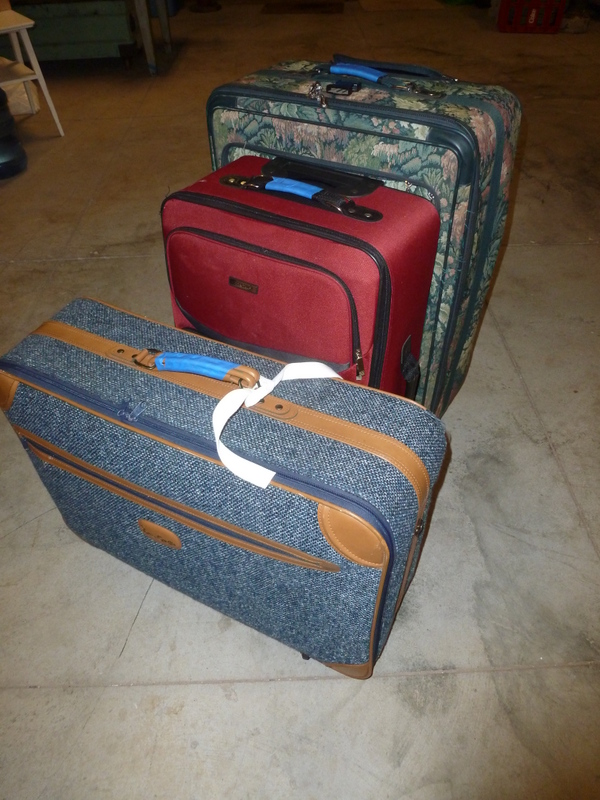
All sails are now packed up in suit cases, ready to be delivered to Panama.

Any constructive comments, ideas, suggestions or sponsors are welcome to speak up!

A major contribution of webbing, quality threads, material and used sails was just made from the businesses below.  To them, "Thank You!"  It will be used in the next batch.


Supporters are always welcome!  ;)


Comment below

Sunday, January 01, 2012

Ulu Sail Project video posted on YouTube this afternoon

I put together a video from hundreds of photos and 39 short film clips taken during this one, very short trip to Panama.  (Now, on Dec. 31, 2012, I've added some extra photos)
  Click on the link below for the story of  the Ulu Sail Project / Delivery, sit back and enjoy.    (Total time about 13 minutes.)

If you like it (or heck, even if you don't ;)  please pass it forward, as networking this will help.

thanks........

http://www.youtube.com/watch?v=LugEpCYxaNU

Friday, July 01, 2011

Why we cruise

there is not much to say about pure pleasure. The pleasure of a sunset or a meal or a love or ???  But so often while sitting in my cockpit, relaxing, I look off to the right or left and see the pure pleasure of 'Life' on the water.  It's why I cruise.


Monday, June 27, 2011

Ulu's (Part 1): Essentials for Island life are often on the mainland.

For the inhabitants of the San Blas Islands(otherwise known as Kuna Yala off of Panama's Caribbean coast), the main source of food and water comes from the mainland.  Even there, many food items are not grown and have to be bought from local traders working the shoreline in cargo vessels of every size and description including small ulus.


Water is rare on any of the 360 small sandy and often over populated islands so virtually all water has to be brought from far upstream in local rivers on the mainland.  This has become a daily chore for men, women and children of the mostly island nation.


 We ventured up a few rivers with Justino, our hired Kuna guide and our friend to get a better understanding of their lives.  Justino was born on another island a few miles away from Gerti, an island were he lives now.  In the Kuna culture when the man marries, he moves in with his wife's family.  If it's on a different island, so bit it. His birth family might not see much of him anymore.

The ulu's (Kuna word for a dugout canoes- "Ulu".) that are used for rivers (shown above) are slightly different from those carved for sea duty.  I did not know this until Justino pointed it out.  The river ulus have a rounded bow and stern under body which allow turns to be made easier.

The ulus used out on the islands (also shown above) have a near plumb bow (that which has a knife like edge near vertical).  This sharp narrow entry, acts to cut the waves and to keep the craft moving straight.  Sort of the directional stability a keel or rudder might give.
 Here, side by side, you can see the Difference between the Sea Ulu on left and the River ulu, on right.


The plumb/sharp bow of a sea ulu, makes it a bit difficult to turn in tight quarters, so the 'sea versions' are rarely used in narrow or curvy streams, but still ok for the wider streams and rivers.

The most common ulu, is the family taxi/the mini-van of western culture and has room for the essentials.  For hauling water, they have to be wide enough to hold buckets or other containers. They also have to carry palm fronds for roof repair on their huts, bamboo for walls, larger poles for structural members, etc.   Not sure what they used 50 or 100 years ago for water retrieval, but now the plastic vessels common in western culture have become the norm in these islands for many uses.


 Seen here, a few larger sea ulus have been beached upstream.  Often, the crew is off harvesting other foods, after loading up on water.
 The lands near the coast, for up to 10 miles inland have been slashed and burned (in sections) to allow for food production.

 Hillsides above in the backround,  have recently been burned, so the timber is being harvested slowly by locals.  The land close up has been planted and now producing bananas, pinapples and other food items.

Banana, pineapple, yuca, avacado, mango, papaya,  potato,  limes are the most common crops.  There are many others who's names I am not familiar with, that they harvest too.  Some for industrial uses, and some as food products.  They use much of the grown environment for building purposes, clothing, medicine, tools, and other uses.

Water however, has to be retrieved from way upstream and often only in certain streams.  Pollution from villages inland have often ruined the water quality for those downstream or out on the islands.  It's a tough life for many. The natural growth of the populace makes resource allocation maybe the next big question to be resolved in their culture.

Once upstream far enough to where the water seems to be clear (?) they carefully scoop up a bit at a time and put into larger containers.


Bananas once harvested, need to have their stalks cut.  Then they produce again.


Seeds are also harvested for crops, but big pods like this are from trees.  It seems the Kunas have not yet progressed into thoughts of forestry crops.  The leaves I'm holding in my left hand, are quite abrasive and are, or at least 'were' used by them as a natural 'sand paper'.


Thankfully, even though they have been slashing and burning much of their land, some of the Large trees still stand.
However, they DO plant and harvest some large items one would not normally think of!  These palms growing on the Right Side of our path are being grown to supply roofing material! Yes, they have found this type of palm works better so they are growing them for this purpose and it takes many years.

These stands of palms, grown in clear cut areas in the jungle are also being protected by a fencing lattice work. It seems some animals like to eat the seed pods that emerge from near the ground. The Kunas are doing their best to protect the seeds it needs for further farming of this necessary crop.

While hiking thru the jungle, Justino found us mangos, avacados and other fruits to snack on.  Here, a friend of his was tending to some groves and offered us a very sweet fruit that we did not recognize.  IT was delicious!


While leaving the jungle we came across another slash and burn area.


At the end of the day, back aboard our boat, one of the Ulus from a nearby island stopped to offer us a fish for dinner.  I think they wanted $2. which we gladly paid.  It's a simple life that ...well, is surprisingly complex.